
Improved Operational Efficiency
AI and ML automate routine tasks and improve operational efficiency in healthcare organizations, increasing productivity and reducing costs.
Advanced clinical software that predicts treatment responses and analyzes vast amounts of medical data to help save lives.
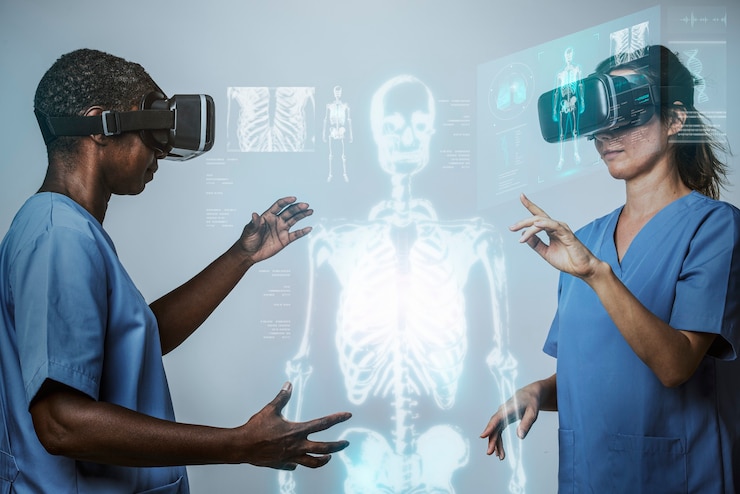

AI in healthcare provides advanced clinical software solutions that save lives by predicting treatment responses and analyzing vast amounts of medical data.
By harnessing AI, healthcare professionals can make more informed decisions, improve patient outcomes, and increase the overall efficiency of medical processes.
AI and ML automate routine tasks and improve operational efficiency in healthcare organizations, increasing productivity and reducing costs.

Implementing AI and ML in digital healthcare software leads to significant cost savings by automating processes and identifying cost-effective treatments.

AI and ML enhance clinical outcomes by enabling early detection and precise diagnosis, leading to better patient outcomes and lower healthcare costs.

By enabling services like tailored treatment, telemedicine, and remote monitoring, AI and ML can create new revenue streams in the healthcare software industry.

AI and ML optimize resource utilization by predicting service demand and allocating resources efficiently, improving patient care and reducing costs.

Healthcare firms can gain a competitive edge by using AI to offer better services, improve patient outcomes, and cut costs, boosting market share and profitability.

AI significantly improves the efficiency of administrative work. AI-powered tools streamline scheduling by automatically analyzing calendars, finding optimal meeting times, and sending invitations, reducing manual coordination and administrative overhead.

AI-powered remote monitoring systems collect data from wearable devices, sensors, and mobile apps to track and analyze patients’ health data in real time, continuously monitoring vital signs such as heart rate, blood pressure, and glucose levels.
AI-powered virtual health assistants use natural language processing and machine learning to interact with users in real time, answering medical questions, providing health guidance, and managing appointments.

AI is transforming mental health care. By analyzing large datasets, including electronic health records and patient self-reports, AI systems identify patterns and predict mental health issues more accurately, enabling earlier detection and more personalized treatment plans.
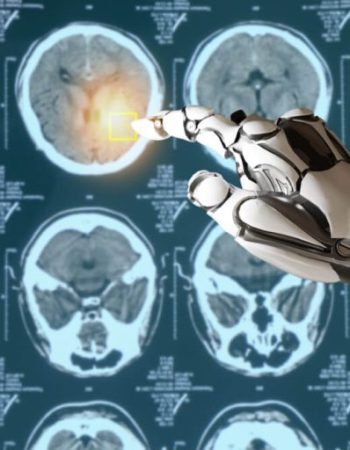
Using machine learning and deep learning, AI analyzes complex medical images such as X-rays, MRIs, and CT scans with high precision, identifying patterns and anomalies that may be difficult for radiologists to detect.
Custom AI solutions designed, built, and deployed for your business.
Learn moreImage and video analysis for detection, inspection, and recognition.
Learn moreExtract meaning from text, documents, and conversations.
Learn moreConversational assistants that support customers and staff around the clock.
Learn more
Our extensive experience in AI development and implementation gives us a proven track record of success and the expertise to meet your business’s AI needs.

With a team of 250+ experts, we offer a broad range of skills and knowledge to support your business’s AI requirements with a comprehensive solution.

Offices in the USA, UK, and UAE let us deliver AI solutions and support worldwide, making us an excellent choice for businesses with global operations.
We prioritize our employees’ growth and development, ensuring a dedicated, motivated team committed to delivering the best AI solutions for your business.
Healthcare technology is the application of scientific knowledge, tools, and systems to improve the delivery of healthcare services. It includes medical devices, electronic health records, telemedicine, artificial intelligence, and mobile health applications, all aimed at enhancing patient care, streamlining processes, improving efficiency, and advancing medical research.
AI and ML are used in healthcare to enhance diagnostics, predict outcomes, and improve patient care. They analyze vast amounts of medical data, identify patterns, and assist in disease detection and treatment planning. AI-powered tools also support personalized medicine, drug development, and patient monitoring.
AI and ML can bring significant value to a health tech business. They can enhance diagnostics, optimize processes, improve patient outcomes, and enable personalized medicine; analyze medical data to provide actionable insights; and automate tasks to increase efficiency and reduce costs, helping you stay at the forefront of innovation and gain a competitive edge.
Key concerns include potential errors or biases in AI algorithms that could lead to incorrect diagnoses or treatment decisions, and the privacy and security of the sensitive patient data AI systems require. Ethical considerations such as accountability and transparency must be addressed to ensure patient trust and safety. There are also concerns about AI’s impact on healthcare jobs and overreliance on technology at the expense of the human aspect of care.
AI is used for medical image analysis to help detect diseases such as cancer, and to analyze electronic health records to predict disease outcomes and assist in treatment decisions. AI-powered virtual assistants and chatbots provide personalized patient support and triage. AI also optimizes healthcare operations, automates administrative tasks, and facilitates drug discovery and development.
Book a free consultation with our US team — AI development, Salesforce, custom software and 24/7 call center solutions under one roof.