
Enhanced Accuracy
Our AI diagnostics services use advanced algorithms to analyze large volumes of patient data, including medical records, lab results, and imaging scans, for exceptional speed and accuracy in diagnosis.
AI diagnostics services that analyze medical records, lab results, and imaging to speed up diagnosis and support better treatment decisions.
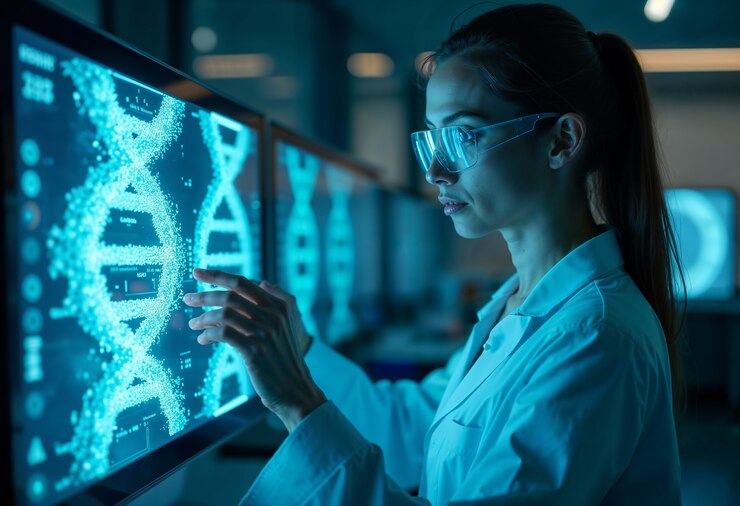
Our AI diagnostics services apply machine learning to patient data, including medical records, lab results, and imaging scans, to help clinicians diagnose faster, reduce repetitive work, and build personalized treatment plans.
Our AI diagnostics services use advanced algorithms to analyze large volumes of patient data, including medical records, lab results, and imaging scans, for exceptional speed and accuracy in diagnosis.

With artificial intelligence, medical data can be processed and analyzed much faster than with traditional methods, reducing the time required to diagnose diseases.

AI-powered diagnostic software automates repetitive tasks like data entry and analysis, letting healthcare professionals dedicate more time to patient care.

AI-driven diagnostic algorithms help create customized treatment plans that account for each patient’s unique medical history and conditions.

Our AI diagnostic solutions provide recommendations that help doctors make informed decisions, leading to more effective, targeted treatments.

AI-powered diagnostic systems are continuously updated with the latest medical research and advancements, keeping their algorithms current and relevant.

AI significantly improves the efficiency of administrative work. AI-powered tools streamline scheduling by automatically analyzing calendars, finding optimal meeting times, and sending invitations, reducing manual coordination and administrative overhead.
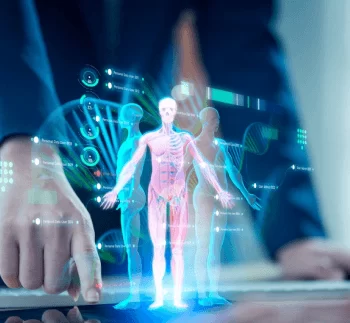
AI-powered remote monitoring systems collect data from wearable devices, sensors, and mobile apps to track and analyze patients’ health data in real time, continuously monitoring vital signs such as heart rate, blood pressure, and glucose levels.
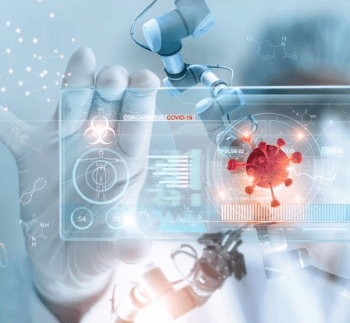
AI-powered virtual health assistants use natural language processing and machine learning to interact with users in real time, answering medical questions, providing health guidance, and managing appointments.
AI is transforming mental health care. By analyzing large datasets, including electronic health records and patient self-reports, AI systems identify patterns and predict mental health issues more accurately, enabling earlier detection and more personalized treatment plans.
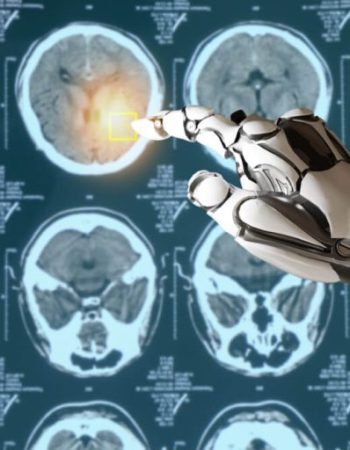
Using machine learning and deep learning, AI analyzes complex medical images such as X-rays, MRIs, and CT scans with high precision, identifying patterns and anomalies that may be difficult for radiologists to detect.
Image and video analysis for detection, inspection, and recognition.
Learn moreModels that turn your data into predictions and automated decisions.
Learn moreForecast demand, risk, and outcomes with data-driven models.
Learn moreExtract meaning from text, documents, and conversations.
Learn more
Our extensive experience in AI development and implementation gives us a proven track record of success and the expertise to meet your business’s AI needs.

With a team of 250+ experts, we offer a broad range of skills and knowledge to support your business’s AI requirements with a comprehensive solution.

Offices in the USA, UK, and UAE let us deliver AI solutions and support worldwide, making us an excellent choice for businesses with global operations.

We prioritize our employees’ growth and development, ensuring a dedicated, motivated team committed to delivering the best AI solutions for your business.
AI can achieve high levels of accuracy, often matching or surpassing human experts in specific fields like radiology, dermatology, and pathology. Its precision improves continuously as algorithms learn from new data and medical advancements.
AI is integrated into healthcare systems to assist with image analysis, symptom assessment, predictive modeling, and electronic health record evaluation, helping clinicians make faster, more accurate diagnoses.
Yes. AI significantly improves disease detection by processing complex datasets to identify early signs and risk factors, enabling timely interventions and improving the likelihood of successful treatment.
AI is widely used in diagnostic imaging, virtual health assistants, predictive analytics, personalized treatment planning, and administrative automation, improving patient care, optimizing resources, and driving innovation.
Book a free consultation with our US team — AI development, Salesforce, custom software and 24/7 call center solutions under one roof.